Fire-Resistant Glass
Fire-resistant glass is a special glass developed to limit the passage of flames and hot gases into other areas during a fire, for a duration determined by testing. Depending on its classification, it can reduce radiant heat or provide thermal insulation against fire.
At Camglass, we offer glass solutions that bring architectural transparency together with fire safety requirements. When used with suitable framing and installation components, fire-resistant glass helps limit the spread of fire and protect escape routes.
Key Features
Limiting the Spread of Fire
Within a tested system, it forms a barrier against flames and hot gases for the specified fire-resistance period.
Heat Control by Classification
EW-class solutions limit radiant heat, while EI-class solutions also limit the temperature rise on the unexposed side, providing thermal insulation.
Transparency and Natural Light
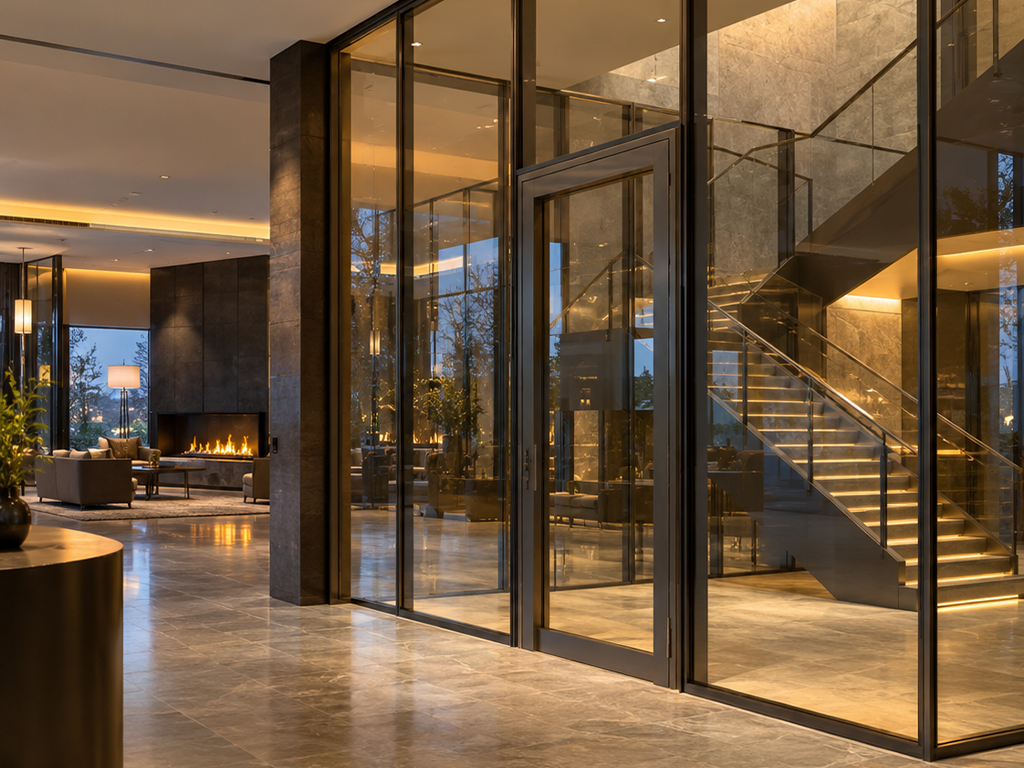
By maintaining visibility and natural light transmission in everyday use, it enables transparent designs in areas that require fire safety.
Related Production Processes
The glass build-up, dimensions and applicable processing steps are determined according to the tested system details of the relevant product. Fire-resistance performance is assessed together with the glass, framing, seals, fixings and installation conditions.
Applications
Fire-Resistant Glass Doors
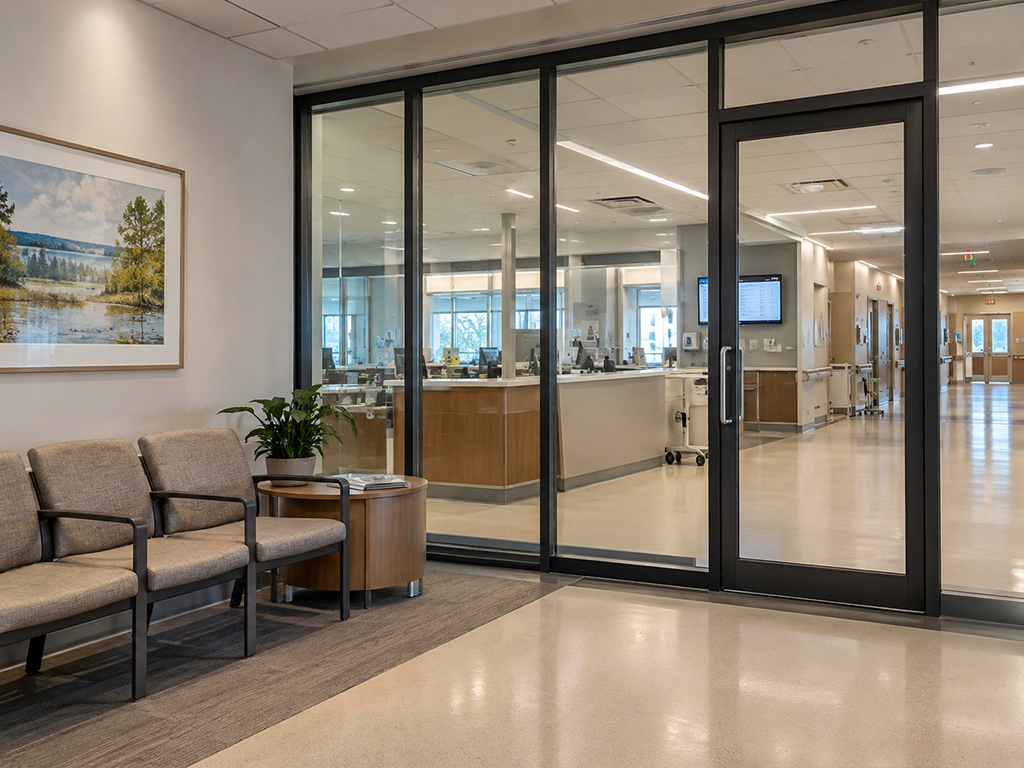
Glass Walls in Fire Compartments
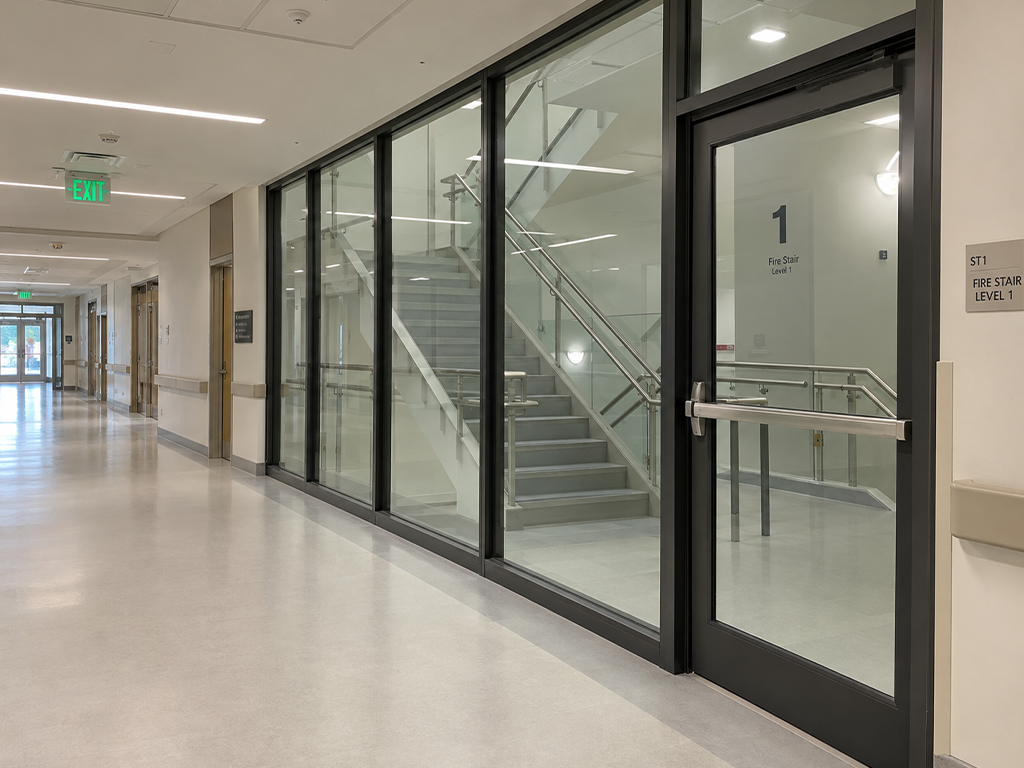
Escape Corridors and Stairwells
Facades and Windows Requiring Fire Resistance
Frequently Asked Questions
How does fire-resistant glass provide protection?
During a fire, it limits the passage of flames and hot gases to other areas for the duration determined by testing. When used with suitable framing and installation components, it helps limit the spread of fire and protect escape routes.
What is the difference between EW and EI classes?
EW class solutions limit heat radiation. EI class solutions additionally limit the temperature rise on the unexposed side, providing thermal insulation against fire.
Does fire resistance depend on the glass alone?
No. Fire resistance performance is assessed together with the glass, framing, seals, fixings and installation conditions. The glass build-up, dimensions and applicable processing steps are also determined by the tested system details of the relevant product.